
March is a transition month. Winter stress is still visible, but spring growth hasn’t fully masked the damage yet. That makes it one of the most important times of year to inspect your trees.
Small issues spotted now prevent emergency removals during spring storms. Here’s exactly what homeowners should be looking for during a March tree inspection.
1. Dead or Brittle Branches
Winter can leave branches weak, dry, and structurally unstable.
In March, trees are still mostly bare in many regions, making it easier to identify:
- Branches with no buds forming
- Cracked or splintered limbs
- Sections that snap easily
- Limbs hanging loosely in the canopy
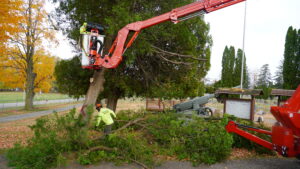
Dead limbs are not just cosmetic issues. Once spring winds pick up, they become projectiles. If large limbs are affected, the tree may require professional trimming or removal if decay is widespread.
2. Cracks in the Trunk
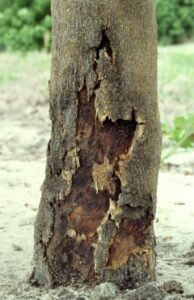
Freezing and thawing cycles cause expansion and contraction. This can create vertical cracks in the trunk known as frost cracks.
Look for:
- Deep splits running vertically
- Bark separating from the trunk
- Areas where wood is exposed
Surface-level cracking may heal. Deep structural splits weaken the integrity of the tree and increase the risk of failure during storms. If the trunk is compromised, removal may be safer than attempting long-term stabilization.
3. Leaning Trees
After months of frozen soil, snow load, and wind pressure, some trees begin leaning subtly or dramatically.
In March, check for:
- Trees leaning more than they did in fall
- Soil heaving or lifting around the base
- Exposed roots on one side
- Gaps between the trunk and soil
A slight lean isn’t always a problem. But if the lean is new or worsening, the root system may be failing. Leaning trees near homes, driveways, or power lines should be evaluated immediately.
4. Root Damage
Roots are often overlooked during inspections.
In early spring, inspect the base of the tree for:
- Mushrooms or fungal growth
- Soft or spongy soil
- Large surface roots that appear severed or damaged
- Construction damage from winter projects
Fungal growth at the base is a red flag. It often signals internal decay that isn’t visible in the canopy yet.
Root damage compromises the entire tree. If roots are failing, removal may be necessary before the tree collapses under its own weight.
5. Hollow or Soft Spots
Decay often starts internally.
Tap the trunk lightly with a rubber mallet or tool handle. If it sounds hollow in sections, that could indicate internal rot.
Other warning signs include:
- Cavities in the trunk
- Areas where bark falls off easily
- Sawdust-like material near the base (possible insect infestation)
A hollow tree may still stand temporarily, but structural stability decreases significantly. In high-wind areas, this becomes a serious liability.
6. Signs of Disease
Early spring is when disease symptoms begin to show before full leaf growth.
Watch for:
- Discolored bark
- Oozing sap from unusual areas
- Blackened or sunken patches
- Premature budding in isolated branches
- Branch dieback at the tips
If only small sections are affected, targeted pruning may solve the issue. If the disease has spread throughout the canopy, removal could prevent it from spreading to nearby trees.
7. Storm Damage From Winter
Even if no major storm occurred, heavy snow and ice add stress.
Check for:
- Split branch unions
- Twisted limbs
- Branches caught in other trees
- Broken tops
Damage that appears minor in March can escalate once foliage returns and adds weight.
Addressing these issues early reduces the chance of emergency service calls during spring thunderstorms.
8. Trees Too Close to Structures
March is the ideal time to reassess spacing before spring growth accelerates.
Look at:
- Branches touching your roof
- Limbs overhanging your driveway
- Trees within falling distance of your home
- Trees near fences or sheds
If a tree is structurally compromised and within striking distance of your property, proactive removal is often the safer financial decision.
Waiting increases risk and emergency removals are almost always more expensive.
9. Dead Trees That Didn’t Survive Winter
Some trees simply don’t make it through harsh winters.
If a tree:
- Has no visible buds
- Shows widespread bark peeling
- Has brittle, dry branches throughout
- Has significant trunk cracking
It may be fully dead.
Dead trees become increasingly unstable as temperatures warm. Removal in March is often easier before surrounding landscaping fills in and access becomes more limited.
Why March Inspections Matter
March offers a visibility advantage:
- Fewer leaves = clearer structural view
- Soil still soft enough for safe removal
- Storm season not yet at peak intensity
- Landscaping hasn’t begun
Addressing issues now prevents:
- Property damage
- Insurance claims
- Emergency service premiums
- Liability risks
From a cost perspective, scheduled removals are almost always less expensive than urgent storm-response jobs.
When to Call a Professional
Homeowners can identify obvious warning signs. But structural integrity, internal decay, and root stability often require professional assessment.
If you notice:
- Significant leaning
- Trunk cracks
- Fungal growth
- Large dead limbs
- Trees near structures
It’s smart to schedule a professional inspection.
A qualified tree service can determine whether:
- Pruning is sufficient
- Cabling or bracing can stabilize the tree
- Or removal is the safest option
Final Takeaway
March is not just a cleanup month it’s a prevention month.
Inspecting your trees now gives you a clear, unobstructed look at structural issues before spring growth hides problems and storm season intensifies risk.
Small cracks, subtle leans, and minor decay don’t stay small for long.
A 30-minute inspection in March can prevent thousands in property damage later.
If you’re unsure about a tree’s condition, getting a professional evaluation early is the safest and most cost-effective move.