
You see it every day. That big tree in the side yard, the one that’s been there longer than you have. It provides shade in the summer, looks great in the fall, and you’ve never really given it a second thought. But here’s the thing: most homeowners have no idea how close their trees actually are to their home. And spring is exactly when that matters most. If you’ve been searching for a tree service near me or wondering whether you need tree removal, this quick walkthrough could save you thousands.
Why Spring Is When Trees Become a Problem
Winter is tough on trees. Months of ice, snow, and freezing temperatures do damage that you can’t always see from the ground. Freeze-thaw cycles crack wood from the inside out. Heavy snow loads split branches and stress root systems. A tree can look perfectly fine from your kitchen window and be structurally compromised in ways that won’t show up until it’s too late. Then spring arrives. The ground softens. Rain saturates the soil. Wind picks up. And suddenly that weakened tree is carrying thousands of pounds of new leaf growth on branches that may not be able to handle the load anymore. This is why more trees fail in spring and early summer than at any other time of year. Not because of hurricanes or ice storms because of the slow, invisible damage that winter left behind. It’s the same reason tree removal services in Grand Rapids and across Michigan see their busiest season right now.
The Simple Test Most Homeowners Have Never Done
Here’s something you can do right now. Walk outside and stand at the base of the tree closest to your house. Look straight up. Now turn and look at your roof. If that tree is taller than the distance between its trunk and your home, your house is in the fall zone. It’s that simple. A mature hardwood tree can be 60, 70, or even 80 feet tall. Most people drastically underestimate that height because they’re looking at it from a distance every day. But a 70-foot tree only needs to be 70 feet from your house to hit it, and when you actually measure, you might be surprised how close that really is. Now factor in the branches. A tree doesn’t just fall as a clean trunk. The canopy can extend 20 to 30 feet beyond the trunk in every direction. So even if the trunk is a comfortable distance away, the branches might already be hanging over your roof, your garage, or your power lines.
What to Look for During Your Spring Yard Cleanup
As part of your spring yard cleanup, take a few minutes to actually inspect your trees. You don’t need to be an arborist to spot trouble. Walk your property and look for these warning signs: Leaning. All trees lean a little, but if a tree is leaning noticeably more than it used to or if you can see soil heaving up on the opposite side of the lean the root system may be failing.
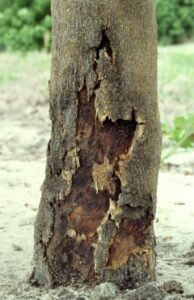
Cracks in the trunk. Deep vertical cracks or splits where major branches meet the trunk are signs of structural weakness. These get worse with every storm. Dead branches up high. Look up into the canopy. If you see large branches with no buds or leaves while the rest of the tree is greening up, those dead limbs can drop without warning. This is where professional tree trimming or tree cutting services come in. Don’t try to handle large dead limbs yourself. Mushrooms or fungus at the base. This usually means decay in the root system or lower trunk. By the time you can see fungus on the outside, the damage inside is often extensive. Bark falling off in large sections. Small patches of missing bark are normal. Large sections peeling away can indicate disease or a dying tree. If you spot any of these, it doesn’t automatically mean the tree needs to come down. But it does mean you should have a professional tree service take a look before spring storms make the decision for you.
Don’t Forget What’s Left Behind
Even after a tree comes down, whether from a storm or a planned removal, you’re left with the stump. A lot of homeowners leave stumps sitting in their yard for years, but they create problems: tripping hazards, pest magnets, and they make mowing a headache. Stump grinding is a quick, affordable way to reclaim that space. The stump gets ground down below grade, the area gets filled in, and you’d never know a tree was there. If you’ve got old stumps from past removals, spring is the perfect time to finally deal with them.
The Cost of Waiting
Here’s what we see every year. A homeowner notices a problem in March or April, figures they’ll deal with it later, and then a May thunderstorm puts that tree through their living room. Now, instead of a planned tree removal, they’re dealing with an emergency job, an insurance claim, temporary housing, and months of repairs. A planned removal on your schedule is always safer, less stressful, and less expensive than an emergency. You get to choose when the crew comes, how the tree comes down, and where everything goes. Mother Nature doesn’t give you those options.
Take 10 Minutes This Weekend
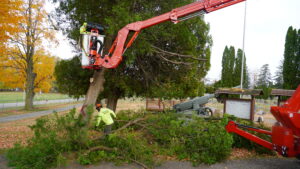
Grab a coffee, walk your property, and actually look at your trees. Not from inside, from underneath them. Check the distance to your house. Look for the warning signs. And if something doesn’t look right, get a professional opinion before the spring storms roll in. Most tree service companies, including us, will come out and give you an honest assessment at no cost. Ten minutes of your time now could save you from a phone call you really don’t want to make later. Think a tree on your property might be too close for comfort? Give Ole Man RB’s Tree Service a call. We handle tree removal, tree trimming, stump grinding, and land clearing across Grand Rapids and the surrounding area. Free estimates, no pressure, no hassle.